A watermelon can reach an impressive size and still disappoint when it is cut. A large fruit, a dark rind or a busy harvest schedule does not prove that the flesh is ready. One fact makes the picking decision especially important: the fruit does not become sweeter after it leaves the vine.
For growers and farm managers, quality therefore starts before loading day. This guide connects harvest maturity with pollination, irrigation and bed management, then explains where agricultural films and nets fit into the growing plan.
Understand pollination · Plan irrigation · Check maturity · Use the field record
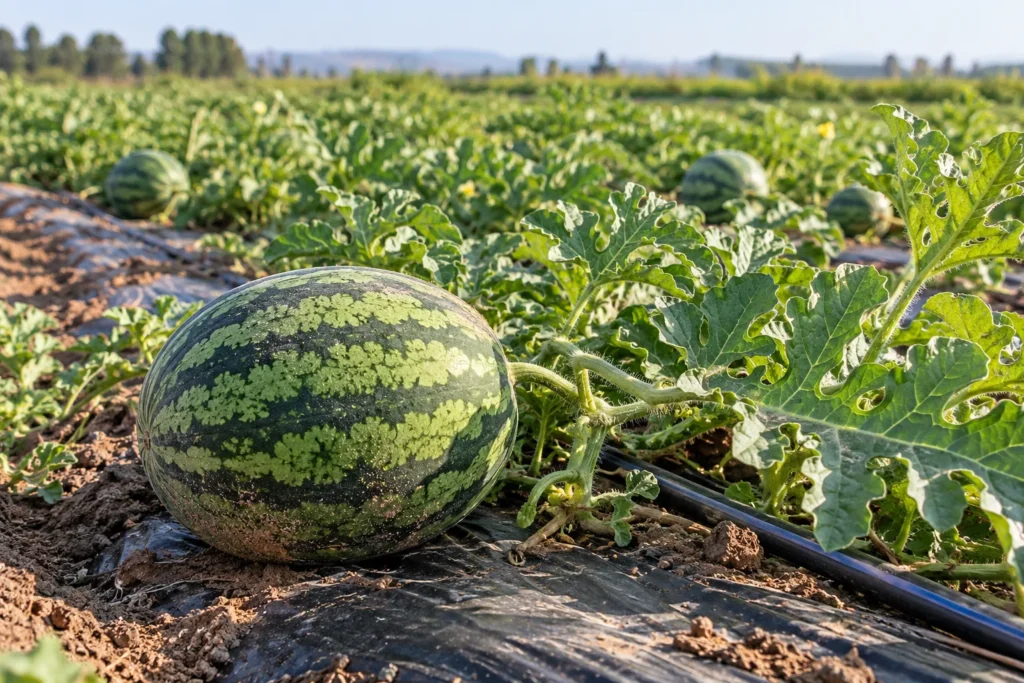
Lead image: AI-generated cultivation illustration, not a ZNY Agri farm or customer project. It does not demonstrate measured crop performance.
Start with the watermelon variety and target market
Record the cultivar before comparing fruit. A small-fruited type and a large-fruited type should not be judged against the same size expectation. Ask the seed supplier about local adaptation, the expected production cycle and the intended market, rather than buying seed on rind appearance alone.
Seedless production also needs a pollination design. University of Delaware’s watermelon pollination guidance explains that triploid seedless plants need viable pollen from a suitable seeded type. Seedless does not mean that the crop can set fruit without pollen transfer.
Keep two terms separate: a pollenizer is the plant providing pollen; a pollinator is the animal moving it. Confirm the pollenizer variety and field arrangement with the seed supplier. Include those plants in the planting and irrigation map so they are not accidentally treated as unwanted off-types.
Give the crop a suitable season and field layout
Watermelon is a warm-season crop. Maryland Extension’s melon growing guide emphasizes sunlight, warm soil and good drainage. A planting date from a temperate northern garden is not a planting calendar for every tropical or southern growing region.
Plan for the mature vines, not just the young transplants. Mark inspection routes, irrigation connections and harvest access before the canopy spreads. The best layout is one the team can still inspect and work in later in the season.
For a new cultivar or production method, keep a clearly marked comparison area and record what changes. A useful trial note identifies the planting, conditions and observations; a photograph of a large fruit alone says little about the rest of the block.
Why watermelon flowers need an access plan
The small swelling beneath a female flower is an ovary, not proof that harvestable fruit is already assured. Iowa State’s growing guide describes separate male and female flowers and the role of bees in moving pollen. Poor pollination can leave the crop with fewer or misshapen fruits.
A physical barrier can exclude helpful visitors as well as pests. Maryland’s vegetable pollination guidance explains why covers must allow insect access when insect-pollinated crops flower. Do not assume a seedless crop can stay sealed under mesh throughout flowering.
If using agricultural insect netting during establishment, decide in advance when and how the cover will be opened or removed. Protected production needs a deliberate pollination method as well as temperature and ventilation management. Our mesh size and airflow guide helps frame the material choice.
Manage water through fruit development
“Stop watering to make it sweet” is too blunt a rule for a global growing guide. Iowa State notes that moisture stress during flowering can hurt fruit set, while stress near harvest can reduce fruit size and hasten vine decline. It also describes cracking associated with excessive rain or irrigation as fruit approaches maturity.
The practical decision depends on crop stage, soil moisture, weather and drainage. Review those observations before reducing irrigation. A soil that is already wet and a sandy root zone drying rapidly are different situations, even if both crops are close to harvest.
Drip irrigation tape can deliver water along the planted row. Treat the water source, filtration, pressure, flow and row length as one design. Before vines hide the lines, mark connections and confirm that the system can be inspected and maintained.

Plan mulch and weed control before vines spread
Weed control becomes awkward once vines occupy the working space. Maryland’s growing guide recommends early weed management and describes using mulch with an irrigation line underneath. Choose the bed preparation method before the crop makes the area difficult to reach.
For agricultural mulch film, match the colour and seasonal purpose to the site. A plan intended to warm cool soil needs a different review from a field already facing hot conditions. Our plastic mulch colour guide explains the main distinctions.
Decide where to inspect moisture under the film and how to find leaks without repeatedly disturbing vines. Also assign responsibility for retrieving conventional plastic at the end of the crop. The material plan should cover installation, use and removal.
Check several signs of watermelon maturity
Minnesota Extension’s cucurbit harvest guide explains that watermelon does not gain sweetness after harvest. A few extra days in a warehouse cannot correct fruit picked before it developed the required sweetness.
Useful clues include a changing ground spot where the fruit rests, drying of the tendril nearest the fruit and changes in rind appearance. Their expression depends on the variety. Watermelon also does not detach at “full slip” like some other melons, so waiting for it to release easily from the vine is the wrong test.
Learn the signs for the actual cultivar and compare them with internal checks. Treat a tap or a single dry tendril as one observation, rather than a universal pass or fail result.
Look inside representative fruit before picking the block
The University of Georgia’s commercial production guide describes cutting sample fruit from different parts of a field and using a hand refractometer to assess soluble solids. External appearance does not always reveal the condition of the flesh.
For farm records, identify each sample by cultivar, block and date. Follow a consistent sampling and instrument procedure, then record flesh appearance, texture and soluble solids together. Agree on the buyer’s requirements in advance rather than inventing one sweetness threshold for every destination.
Keep the observations traceable. If one part of the field differs from another, retain those identities in the harvest record. Mixing all samples into a single reassuring average can hide a section that deserves another inspection.
Protect the quality already grown
Georgia’s guide also emphasizes gentle harvest and handling. Fruit can suffer internal damage even when the rind does not show an obvious wound. Cut fruit from the vine, handle it carefully and avoid treating an intact-looking rind as permission for rough loading.
Before picking starts, walk the route from the block to the loading area. Identify where fruit changes hands, where it may be dropped and who records the lot. The harvest plan should protect quality as carefully as the growing plan attempts to produce it.
A simple watermelon field record
- Identify the planting. Record cultivar, seed lot, planting date, location and whether a pollenizer arrangement is required.
- Map the materials. Mark irrigation zones, connections, mulch types and any temporary covers.
- Review flowering access. Record when covers were changed and who checked the pollination plan.
- Record conditions. Note recent rain, irrigation adjustments and observations beneath the soil surface.
- Compare maturity evidence. Keep external observations and internal sample results attached to the same block and date.
- Follow the lot. Link the picking decision with the buyer, packing plan and loading record.
Connect the crop plan with the right materials
ZNY Agri supplies irrigation, ground-cover and crop-protection materials for agricultural projects. A useful inquiry includes the country, growing season, crop stage, row layout, water source and intended quantities. These details make a specification discussion more useful than asking for a product name alone.
Compare the agricultural product families or discuss your watermelon project with Ethan on WhatsApp. Confirm final specifications, samples and delivery arrangements for the individual project.
Prepared by the ZNY Agri editorial team using the university extension resources linked throughout. This is educational guidance for a global audience; adapt the production plan to local conditions and cultivar recommendations. Illustrations do not promise crop results.