A finer screen can keep more insects out—and make it harder for air to get in. That trade-off is easy to miss when buying insect netting by mesh count alone. A greenhouse needs a barrier that suits the target pest and a ventilation system that still works with that barrier in place.
For commercial growers, nursery managers and agricultural distributors, the useful question is not simply “40 mesh or 50 mesh?” It is: what opening size, airflow performance and installation detail does this crop need? Here is how to approach the decision before ordering rolls.
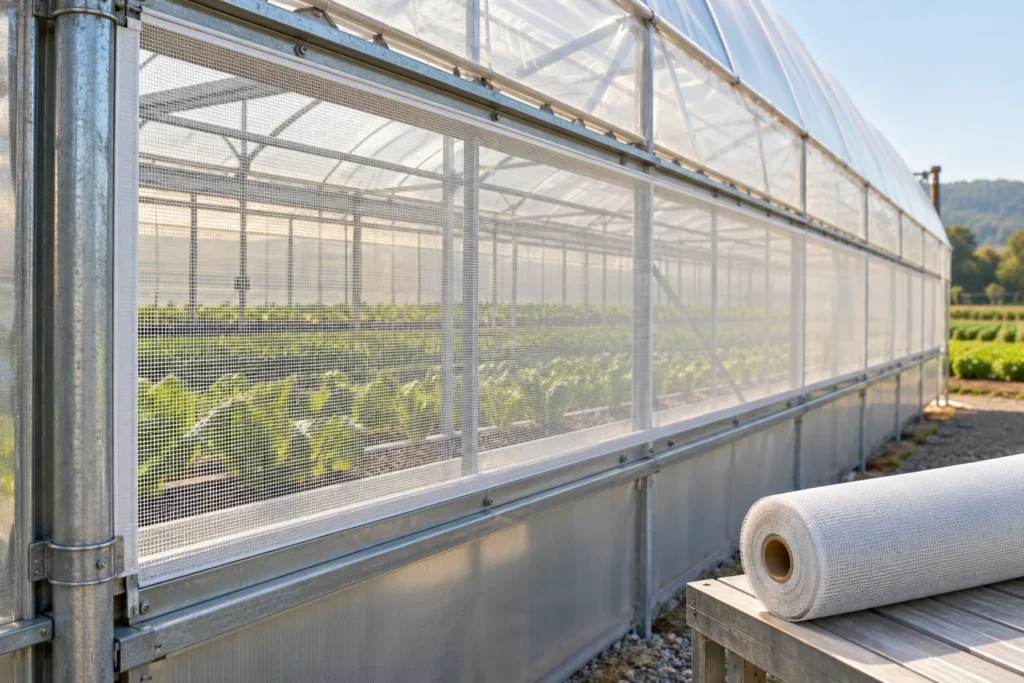
Cover image: AI-generated illustration of greenhouse screening. It does not document a ZNY Agri installation, factory or customer project.
Understand mesh and aperture · Check the airflow trade-off · Compare catalogue references
What does insect netting actually do?
Insect netting forms a physical barrier across a growing area or an opening such as a greenhouse vent. The openings must suit the insects being excluded. However, a screen is only part of the protection system: pests can arrive through an unprotected doorway, a tear or infested planting material.
Start by identifying the pest rather than choosing the highest available mesh number. The University of Connecticut’s greenhouse pest-management guidance recommends deciding which insects need to be excluded before selecting screening. It also stresses adequate ventilation and routine monitoring.
A useful buying brief therefore names the crop, target pest, growing structure and location. “Net for vegetables” leaves too many of the important questions unanswered.
Mesh count is not the same as hole size
Mesh count describes the number of openings per inch under the stated counting convention. Aperture describes the actual clear opening. Yarn thickness and the woven pattern influence that opening, so a mesh label alone is not a complete specification.
A University of Florida study of protective screens measured both the short and long dimensions of openings. Its results illustrate why a single mesh number can hide differences in geometry. The research concerns specific screens and Asian citrus psyllids; it does not certify every product carrying a similar mesh label.
A simple example: two screens can both say “50 mesh”
For an ideal, evenly spaced square weave, opening width can be estimated as:
Opening in millimeters ≈ 25.4 ÷ mesh count − yarn diameter in millimeters
With 50 openings per inch, the spacing is approximately 0.508 mm. Hypothetical 0.15 mm yarn leaves an opening of about 0.358 mm; 0.20 mm yarn leaves about 0.308 mm. The mesh count is the same, but the opening is different.
This is a geometry example, not a specification for ZNY Agri products. Real screens may have rectangular openings, different yarn sizes in each direction or other constructions. Ask for the measured aperture in both directions and a representative sample instead of treating this formula as an insect-exclusion guarantee.
Why finer insect netting can change greenhouse ventilation
Air has to pass through the open spaces in a screen. Smaller openings or more material across the opening can increase resistance to airflow. The amount of that resistance depends on the particular screen and operating conditions, not just its advertised mesh count.
UConn’s insect-screening guide explains that extra screen area may be needed to maintain adequate airflow. It also distinguishes naturally ventilated structures from those using exhaust fans. There is no universal percentage that can be copied from one screen to another.
For a greenhouse project, ask the designer to consider vent area, screen resistance and the ventilation system together. Request airflow or pressure-drop data for the actual material where available. Adding a finer screen to an existing vent should be a design decision, rather than a simple roll replacement.
Maintenance matters too. The University of Florida greenhouse ventilation guide notes that screens reduce airflow and can collect dust. Include inspection and cleaning in the operating plan. A clean sample on a desk does not represent every condition the material will face in service.
40 mesh and 50 mesh: what the catalogue tells you
The ZNY Agri product overview lists the following reference options. They are starting points for a specification discussion, rather than universal pest recommendations.
| Reference mesh | Reference weight | Reference roll |
|---|---|---|
| 40 mesh | 80 g/m² | 3 × 50 m |
| 50 mesh | 120 g/m² | 3 × 50 m |
Weight per square meter does not identify the insects a screen will exclude. Likewise, a mesh number does not establish UV durability, tensile strength or a guaranteed service life. Agree on the construction, tolerances and supporting product data for the chosen grade.
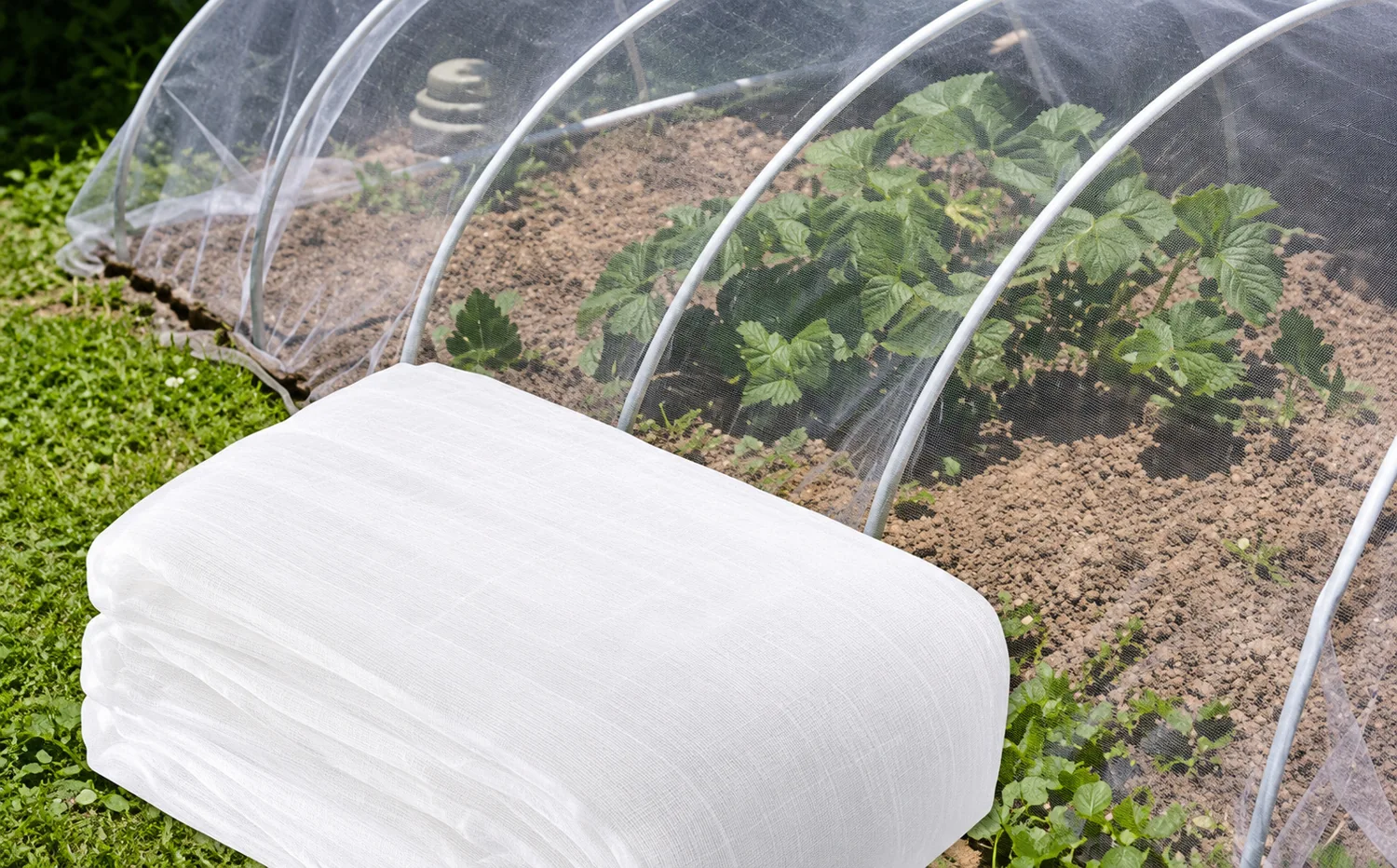
Review the agricultural insect screen reference options alongside the greenhouse material plan. This keeps screen selection connected to the structure where it will be used.
A good roll can still fail at the doorway
Walk around the proposed enclosure before finalizing the purchase. The University of Florida’s greenhouse exclusion guidance discusses protected entrances, screened ventilation openings and pest monitoring. An unscreened route can undermine the protection offered by the rest of the enclosure.
Inspect five practical weak points:
- Doors: plan how workers and materials enter without leaving an open route into the crop.
- Vents: include roof and side openings in the assessment, not only the easiest wall to reach.
- Edges and joints: agree on fixing and joining details with the installer.
- Damage: define how tears, loose sections and distorted openings will be found and repaired.
- Incoming plants: inspect planting material; a screen cannot remove insects already inside it.
For a retrofit, photographs and measured opening sizes can reveal more than the total greenhouse floor area. A material list should account for joints, fixing margins and repair needs without inventing a standard allowance for every structure.
Test the question that matters to your farm
Before committing to a large purchase, agree on a sample and the evidence needed to accept it. A visual check can compare weaving consistency and workmanship; it cannot establish the exclusion of a named pest or years of outdoor performance.
For a trial installation, record the material specification and keep the management conditions as comparable as practical. Track the crop environment, screen condition and pest observations using a consistent method. Involve the greenhouse designer or crop adviser when deciding whether the ventilation remains suitable.
For distributors, retain the approved sample and a written specification with the order. This gives both parties a clearer reference if a later shipment differs. Use the multi-product procurement list when the project also includes film, shade materials or irrigation.
Common questions about insect netting
Will 50 mesh stop every small insect?
No mesh label can support that promise on its own. Pest size, actual openings, material condition and the installation all matter. Ask for evidence concerning the named pest and selected screen rather than relying on “insect-proof” as a general description.
Can shade net replace an insect screen?
A shade percentage describes light reduction, not an insect-exclusion specification. The Florida screen study warns that product names containing “40” or “50” can refer to shading rather than mesh. Compare agricultural shade net separately, then confirm whether each material meets its intended function.
Do I still need to scout after installing a screen?
Yes. Screening does not replace checking plants and monitoring pest activity. A complete plan also considers planting-material hygiene, entry procedures and the crop’s pollination or beneficial-insect requirements. Discuss these with your crop adviser before enclosing the growing area.
Choose insect netting around the crop
The most useful next step is a clear brief: crop, target pest, destination climate and planting season, ventilation type, opening dimensions and required quantity. Include a drawing or photographs if available.
ZNY Agri can discuss reference insect netting options for a farm, nursery or distributor order. Send your project requirements or discuss the details with Ethan on WhatsApp. Samples, availability and delivery arrangements are confirmed for the selected specification and order.