A tomato crop can look green and vigorous while producing disappointing fruit. More leaves, more fertilizer or more water will not automatically solve the problem. Roots, light, flowers and developing fruit must work together, and the most useful intervention depends on which part of that system is struggling.
This guide explains practical growing principles for growers, farm managers and agricultural suppliers. It connects crop observation with irrigation, mulch and support decisions, while leaving planting dates and final specifications to the local climate and production system.
Know the growth habit · Check the root zone · Understand flower drop · Use the field checklist
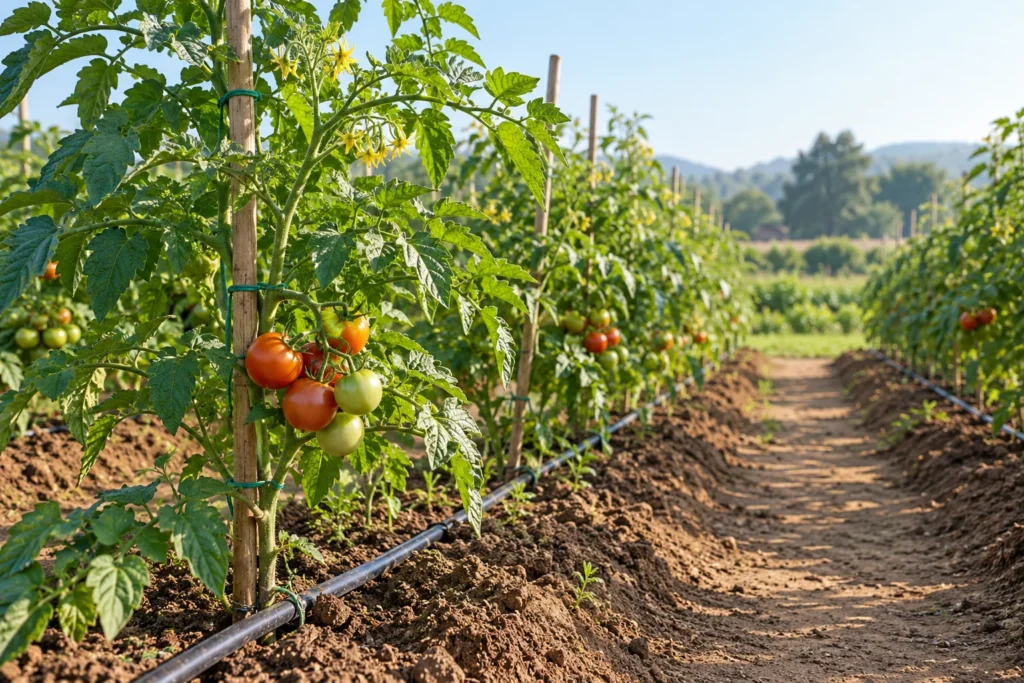
Lead image: AI-generated cultivation illustration, not a ZNY Agri farm or customer project. The scene illustrates a growing system and does not demonstrate measured crop performance.
First identify the tomato growth habit
Determinate and indeterminate describe growth patterns, not simply fruit size. Determinate varieties stop extension growth at terminal flower clusters. Indeterminate varieties continue producing new growth and flower clusters while conditions remain suitable. Check the seed supplier’s description rather than deciding from the appearance of one young plant.
Cornell’s tomato-training guidance explains why this distinction changes pruning decisions. Side shoots, often called suckers, can carry flowers and fruit. Removing every shoot is therefore not a universal route to a better harvest, particularly for determinate plants.
Choose the variety, spacing, training method and labour plan together. A managed crop trained to selected leaders differs from a crop grown in cages with less pruning. Borrowing the pruning rule from one system while keeping the spacing and supports of another can create an awkward layout.
Build the crop around the growing season
A calendar date is not a growing condition. Before transplanting, check frost risk, soil warmth, drainage and the weather expected during establishment. Advice written for a northern spring should not become a fixed planting month for growers in tropical or southern regions.
University of Maryland’s tomato growing guide describes the crop as frost-sensitive and notes the importance of matching spacing to the growth habit and support method. Start with healthy transplants, then allow access to inspect, train and harvest the mature crop.
Write down the target market as well. A fresh-market slicing variety, a processing crop and a long-season protected crop may have different harvest and handling priorities. Those choices help determine whether an apparently productive planting is producing the fruit your buyer actually needs.
Water the root zone, then check the result
An irrigation timer records a command, not proof that every plant received useful water. Soil texture, rooting depth, crop size and weather change the response. A fixed number of minutes or litres per day cannot serve every farm.
Minnesota Extension’s vegetable irrigation guidance emphasizes consistent moisture and monitoring. It also links uneven moisture with fruit-quality problems such as splitting. The goal is a managed root-zone supply, rather than alternating severe drying with a large rescue irrigation.
For a practical check, inspect representative plants near the beginning, middle and end of irrigated rows. Compare moisture beneath the surface and look for leaks, blocked emitters or a wet patch beside a dry root zone. Record the observation before changing the schedule.
Drip irrigation tape is one way to deliver water along the crop row. Specify the water source, filtration, operating pressure, emitter arrangement and row length as a system. Closer plant spacing does not by itself establish the correct emitter spacing or irrigation runtime.
Blossom-end rot is not proof that the soil needs more calcium
A tan, sunken or darkened area at the blossom end of a fruit can indicate blossom-end rot. The affected tissue lacks enough calcium during development, but that does not automatically mean the soil contains too little calcium.
Minnesota’s tomato disorders guide describes several contributing factors, including moisture fluctuations, root injury and excessive nitrogen. Review those conditions and soil-test information before purchasing another amendment. Different varieties can also respond differently under the same conditions.
Record where the damage appears on the fruit and when it started. Not every fruit rot is blossom-end rot, and secondary decay can obscure the original symptom. Persistent or uncertain problems need local diagnosis rather than a treatment chosen from a single photograph.
Why tomato flowers may drop before fruit develops
Flowering is not the same as successful fruit set. Penn State’s heat-stress guidance explains that high temperatures can disrupt flower development, pollination and fruit set. Flowers and fruit may suffer even when leaves still appear reasonably healthy.
If blossoms are dropping, compare the pattern with recent daytime and night-time conditions. Also examine moisture and nutrition. A new fertilizer application will not necessarily correct heat-related flower loss.
Tomato flowers can use their own pollen. Minnesota’s crop pollination guide explains that flower movement can release pollen and that bumblebee buzz pollination is effective. In protected cropping, review the pollination method alongside ventilation and temperature management. A closed growing structure needs an explicit plan for all three.
Where seasonal heat and strong sunlight are concerns, our shade cloth and crop-light guide explains the light trade-off. Adding denser shade without checking the crop’s available light can solve one concern while introducing another.
Manage leaves and fruit as a connected canopy
Leaves support growth, so a neat-looking bare stem is not a useful target by itself. Match training to the chosen cultivar and support system, and preserve the foliage needed by the crop.
The University of Minnesota’s tomato growing guidance notes that excessive nitrogen can produce leafy plants that are slow to fruit. Healthy crop management therefore involves more than encouraging the largest possible canopy. Base nutrient decisions on testing, crop stage and observed growth.
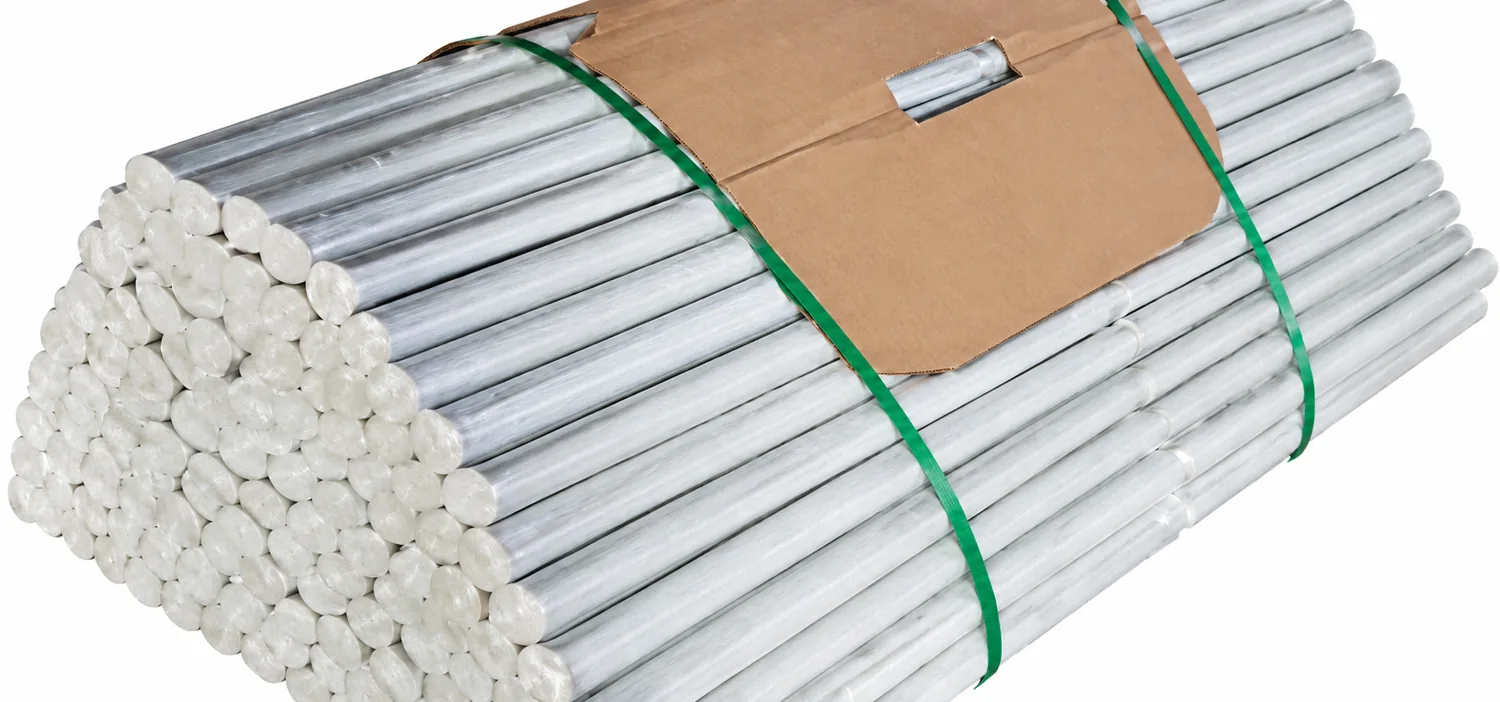
For upright crops, establish the support layout early and inspect plant connections as stems thicken. ZNY Agri’s fiberglass plant support rods are a material option to discuss for an appropriate support role. Confirm the required dimensions and fixing method; a catalogue diameter is not a rated load for an entire trellis.
Choose tomato mulch for conditions beneath the cover
Before covering the bed, decide what you need to manage: weeds, soil moisture, soil temperature or several of these together. Plan the irrigation line and planting openings at the same time.
For agricultural mulch film, colour and seasonal purpose matter. Black film used for warming soil is a different decision from managing an already hot root zone. Our mulch colour guide explains those choices.
Keep a place to inspect moisture under the cover. A dry-looking surface, a covered bed and a working timer do not establish what is happening around the roots. Include retrieval and appropriate disposal of conventional film in the end-of-crop plan.
A tomato field checklist before adding another input
- Name the stage. Record the variety, transplanting date and whether the crop is establishing, flowering, setting fruit or carrying a harvest.
- Describe the pattern. Identify whether the problem affects one plant, a row end, a wet section or the whole planting.
- Check water delivery. Look beneath the surface and compare representative points along irrigated rows.
- Review the canopy environment. Note light, recent heat, ventilation and flower condition. Include night-time conditions when investigating flower drop.
- Check recent changes. Record fertilizer, pruning, cover installation and irrigation adjustments rather than relying on memory.
- Change one manageable factor. Where practical, compare a small section and track marketable fruit quality as well as plant appearance.
Plan the materials around the crop
For farm managers and distributors, a useful inquiry includes the crop and cultivar, country, growing season, open-field or protected setting, row dimensions, irrigation water source and quantities. This helps connect the material specification with the growing method.
ZNY Agri supplies irrigation, ground-cover and plant-support materials. Compare the product families or discuss your tomato crop requirements with Ethan on WhatsApp. Specifications, samples and delivery arrangements are confirmed for each inquiry.
Prepared by the ZNY Agri editorial team using the university extension resources linked throughout. Educational guidance for a global audience: adapt the growing plan to local conditions. Illustrations and catalogue information do not promise crop results.