Shade cloth can help a vegetable crop through intense sunlight, but choosing the darkest net can create a different problem: too little light for growth. Before you cover a bed, ask what the crop needs, how much light already reaches it and what the percentage on the label actually describes.
This guide explains the growing decisions behind agricultural shading. It is for growers, farm managers and agricultural distributors working across different climates, from open vegetable beds to protected cropping.
Understand the percentage · Match shade to the crop · Account for greenhouse layers · Run a small field trial
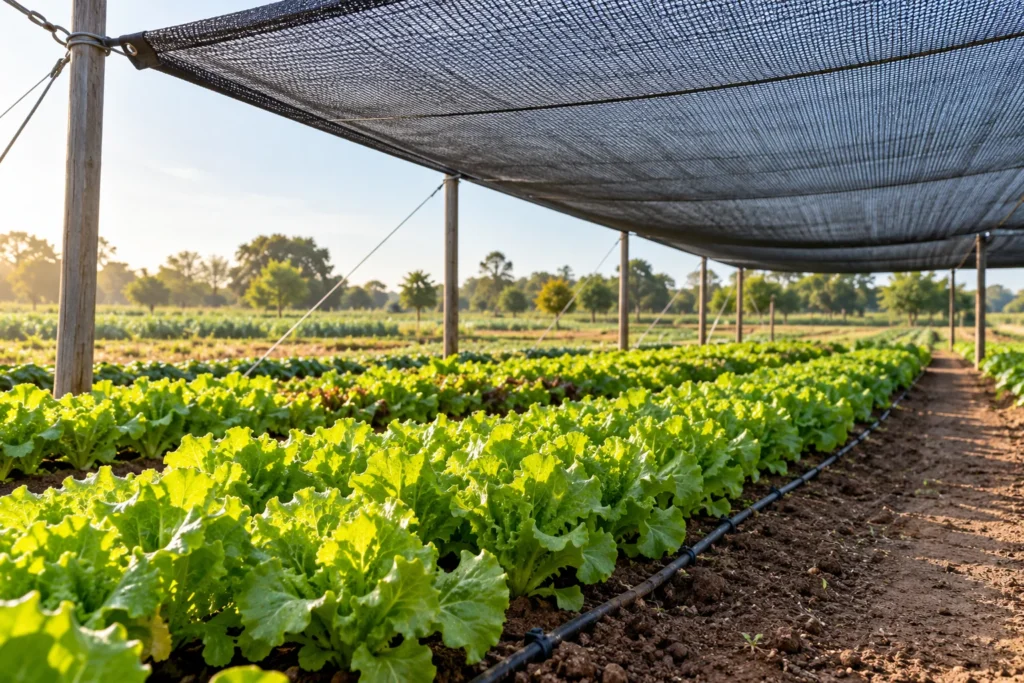
Lead image: AI-generated cultivation illustration, not a ZNY Agri farm or customer project. Its appearance does not demonstrate a measured shade percentage.
What does a shade cloth percentage mean?
For shade cloth, the number generally expresses how much incoming light the material blocks. In a simplified example, a 30% rating leaves about 70% of the reference light available. A 50% rating leaves about half. The actual value depends on the measurement method and conditions.
| Nominal shade | Light remaining |
|---|---|
| 30% | Approximately 70% |
| 50% | Approximately 50% |
| 70% | Approximately 30% |
Ask whether the quoted rating refers to total solar radiation, photosynthetically active radiation or another test measure. These are not interchangeable descriptions. Colour, construction and test conditions belong in the specification, alongside the percentage.
For a farm purchase, keep three questions separate: How much light is reduced? How is the material made and finished? What evidence supports its outdoor durability? A photograph or the weight per square metre cannot answer all three.
How much shade cloth do vegetables need?
Start with the crop, cultivar and growth stage. A fruiting tomato crop and newly transplanted leafy greens do not have identical goals. Then consider season, cloud cover and the existing production system. A shade cloth rate that helps during a bright, hot period may remove useful light in a cloudy season.
University of Maryland research has tested 30% black shade over tomatoes and peppers under local summer conditions. Its vegetable heat-management report provides a useful example of moderate shading. Treat that figure as a starting point for a local comparison, rather than a prescription for every farm or a promise about a particular net.
NC State Extension’s season-extension guidance also distinguishes between heat-sensitive leafy crops and fruiting vegetables. That distinction matters more than choosing one percentage for an entire continent. “Suitable for Africa” or “suitable for the Middle East” is not a crop-light specification.
Look beyond one bright afternoon
A light reading is a snapshot. Daily light integral, or DLI, describes the plant-usable light accumulated over a whole day. Two days can have similar midday sunshine but very different daily totals because of clouds and day length.
Cornell’s greenhouse-lighting notes explain the difference between instantaneous light and DLI. When comparing treatments, use a suitable plant-light sensor at crop height. A phone lux reading, which follows human visual sensitivity, is not equivalent to a PAR measurement.
For practical records, note when and where a reading was taken. Compare similar positions inside and outside the shaded section. Record the weather too; otherwise a change in cloud cover can look like a change caused by the material.
Greenhouse film and shade cloth work together
A greenhouse crop already receives less light than an unobstructed outdoor crop. Film, structural members and other layers all affect the light reaching the leaves. Adding shade cloth therefore means adding another reduction, not starting from outdoor sunlight again.
Do not add the two transmission percentages or simply subtract their shade ratings. Before combining greenhouse covering film with a shading layer, request comparable test information and check light at the crop. Reassess the arrangement when the season changes.
Keep ventilation, irrigation and shading in the same plan
Reducing incoming radiation is only one part of heat management. A canopy with blocked air paths can still create a difficult growing environment. Keep the intended ventilation openings and service aisles usable, and check the structure and fixings for local wind exposure.
Shade material also has a different job from an insect barrier. If pest exclusion is required, specify the screen separately and consider its effect on airflow. Our insect netting and ventilation guide explains why a finer barrier is not automatically a better whole-system choice.
Check the root zone before changing irrigation runtime. Shading does not create one new watering schedule for every soil and crop. Inspect moisture and delivery along representative rows, including the far end. With drip irrigation tape, include emitter condition, filtration and operating pressure in that inspection.
Bed coverings add another decision. If a hot-weather crop is also grown over film mulch, review the root-zone conditions rather than assuming every dark material cools the crop. Our plastic mulch colour guide explains why film appearance and seasonal purpose matter.
Use shade cloth thoughtfully when establishing seedlings
Transplants raised in a protected environment need gradual adjustment to field conditions. University of Minnesota’s planting guidance includes temporary shade during hardening. The aim is a controlled transition, not leaving young plants indefinitely under the heaviest available cover.
Keep a short record of the transplant date, exposure changes and plant response. A temporary establishment treatment and a season-long fruiting-crop treatment should have separate review dates. This makes it easier to remove or adjust protection when its original purpose has passed.
A simple field trial before covering the whole farm
Use a manageable shade cloth test section first. The following checklist helps turn an impression into a decision you can review:
- Write down the problem. Is the concern leaf damage during hot afternoons, transplant establishment or poor production? Record the symptoms before choosing a material.
- Make the comparison fair. Use the same cultivar, planting date and similar bed conditions. Keep a comparable reference section where feasible.
- Record the treatment. Note the net’s identification, declared shade measure, layout and installation date. Photograph the layout without treating the photograph as a light measurement.
- Measure the growing environment. Track crop-height light, temperature and root-zone moisture at consistent locations. Record changes in irrigation and ventilation.
- Judge the crop outcome. Review establishment, flowering where relevant, harvest quantity and marketable quality. Greener leaves alone do not establish better commercial performance.
- Set a review date. Continue observations through changing weather. Adjust the plan before extending it to the remaining area.
Shade cloth: common growing questions
Is 70% shade better than 30% for vegetables?
It blocks more light, which is not the same as being better for the crop. Choose a trial rate around the crop’s light needs and the local season. Do not transfer a shade-loving ornamental recommendation directly to a fruiting vegetable crop.
Will the percentage tell me the temperature drop?
No. Temperature response also depends on weather, airflow and the growing structure. Maryland’s garden protection guidance discusses shade as one tool for managing heat, alongside materials with different functions. Check conditions under the installed cover instead of converting a shade rating into degrees.
Can one net specification suit every season?
Not necessarily. A useful summer treatment can limit light at another time of year. Plan inspection, adjustment and removal access when designing the layout, rather than treating the first installation as a permanent growing recipe.
Turn the crop plan into a clear material inquiry
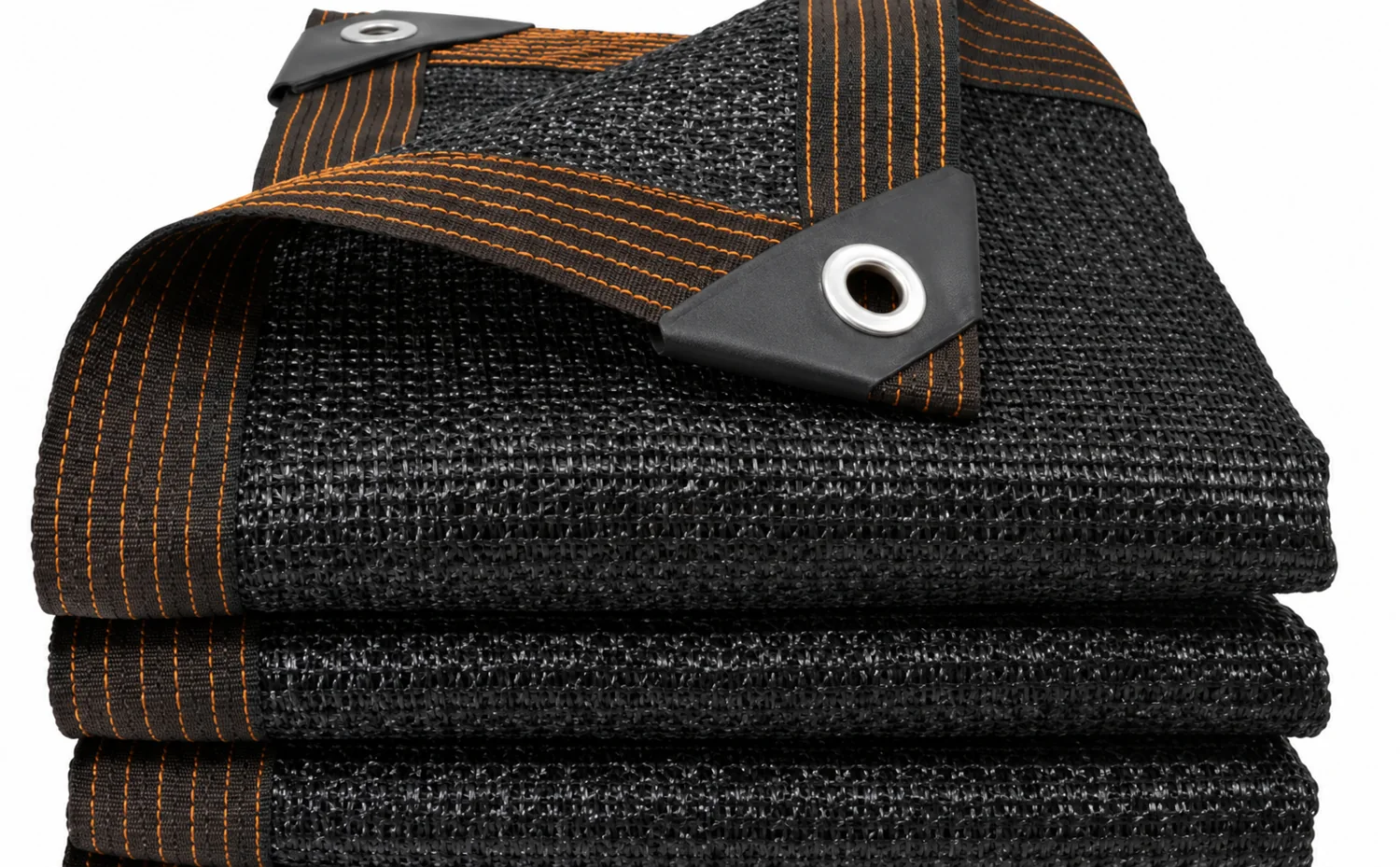
For agricultural shade net options, send the crop, country, growing season, open-field or protected setting, covered area and intended shade measure. Then discuss finished dimensions, edge details, fixing requirements, quantities and suitable test evidence.
ZNY Agri supplies shading, covering and irrigation materials for farm and distributor inquiries. Discuss your crop and material requirements with Ethan on WhatsApp. Samples, specifications and delivery arrangements are confirmed for each inquiry.
Prepared by the ZNY Agri editorial team using the university extension resources linked throughout. Adapt the growing plan to local conditions. Educational examples and illustrations do not represent product test results or a guaranteed crop outcome.