Two rolls of weed control fabric can both say “100 GSM” and still be different purchases. One may have a different construction, width tolerance or outdoor-use specification. If you compare only the price per roll, those differences can stay hidden until installation.
For importers, agricultural distributors and commercial nurseries, buying weed control fabric in bulk starts with a clear specification. This guide explains seven checks that help you compare offers, calculate quantities and prepare a useful request for quotation.
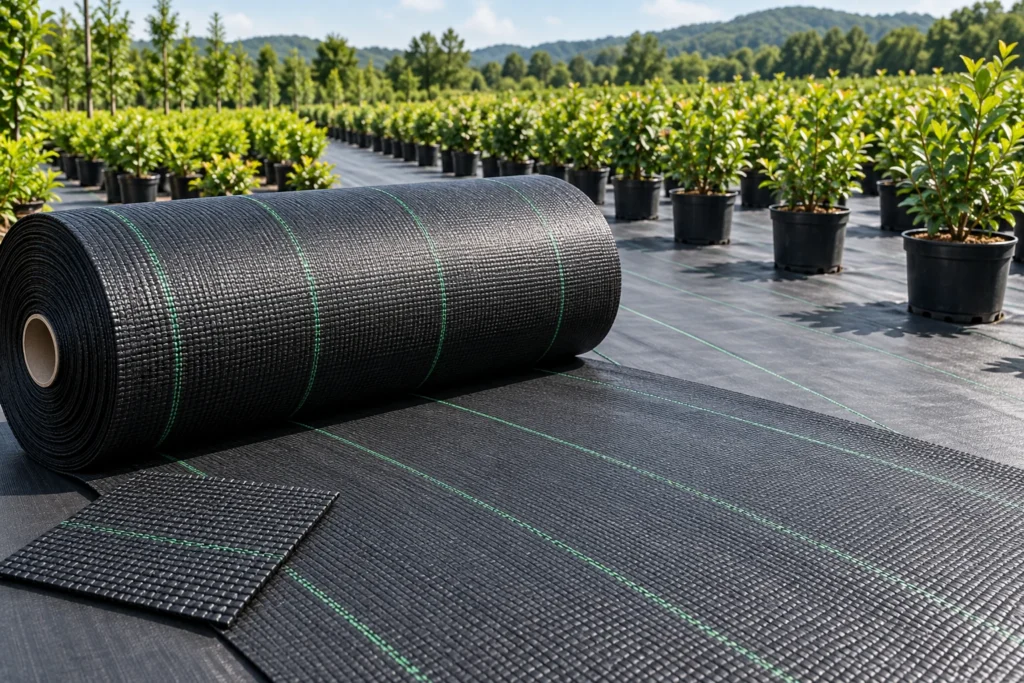
Cover image: AI-generated illustration of woven ground cover and a nursery application; it is not a photograph of a ZNY Agri facility or customer project.
Jump to the seven buying checks · See the 100 GSM reference · Prepare a bulk enquiry
What does weed control fabric actually do?
Ground cover acts as a physical barrier at the soil surface. Agricultural buyers use it in nursery container areas, greenhouse walkways and selected orchard rows to help manage weed growth. The material still needs to suit the crop, irrigation method and installation conditions.
Woven PP ground cover and nonwoven fabric have different structures. Neither the word “fabric” nor a GSM figure tells you the whole specification. Likewise, solid agricultural mulch film is a separate material choice. Confirm construction and water movement against a sample rather than treating these products as interchangeable.
Penn State Extension explains that geotextile weed barriers can allow air and water exchange through their structure. It also notes that weeds can establish in material accumulated above a fabric. That is why site preparation and surface maintenance remain part of the job. Read the nursery weed-management guidance.
7 checks before a weed control fabric wholesale order
1. Specify the application before the weight
Is the roll for pots in a nursery, an orchard strip or a greenhouse aisle? Share the crop, destination country, bed layout and irrigation arrangement. Foot traffic, exposure and the intended period of use all belong in the enquiry. For a combined material plan, see our orchard and nursery solutions.
2. Check the weed control fabric construction
Write down the polymer and whether the product is woven or nonwoven. Request an approved sample of the proposed grade. If planting lines, openings or a particular edge finish are needed, include them in the specification and ask the supplier to confirm feasibility.
3. Treat GSM as one measurement, not a quality guarantee
GSM means grams per square metre. It describes mass per unit area; it does not by itself establish tensile performance, drainage or UV service life. Ask for the agreed GSM tolerance and how samples will be checked. Compare offers on the same construction and acceptance criteria.
4. Ask for relevant outdoor-use evidence
A claim such as “UV resistant” needs context. Ask which grade is proposed, what test evidence is available and which exposure conditions any warranty covers. A nursery in Kenya and an exposed site in the Gulf may have different operating conditions. Do not convert a generic UV claim into a fixed lifespan.
5. Check water movement in your application
Review a sample with the planned irrigation and prepared surface. Agree the required permeability and any test method before ordering. A casual water-pour demonstration is useful for discussion, but it does not replace an agreed performance requirement or a site drainage plan.
6. Match roll dimensions to the layout
Confirm actual width, length, tolerances and the area covered by each roll. Then prepare a cutting and overlap plan. A nominally cheaper roll can require more joins or generate more offcuts if its width is poorly matched to your rows.
7. Put packing and shipment details in the offer
Ask for roll or pallet packing, core details, labels, outside dimensions and separate net and gross weights. Importers should also confirm the destination, shipping scope, required documents, payment terms and production timing. Our manufacturing and international supply process explains the order stages.
100 GSM weed control fabric: what the numbers tell you
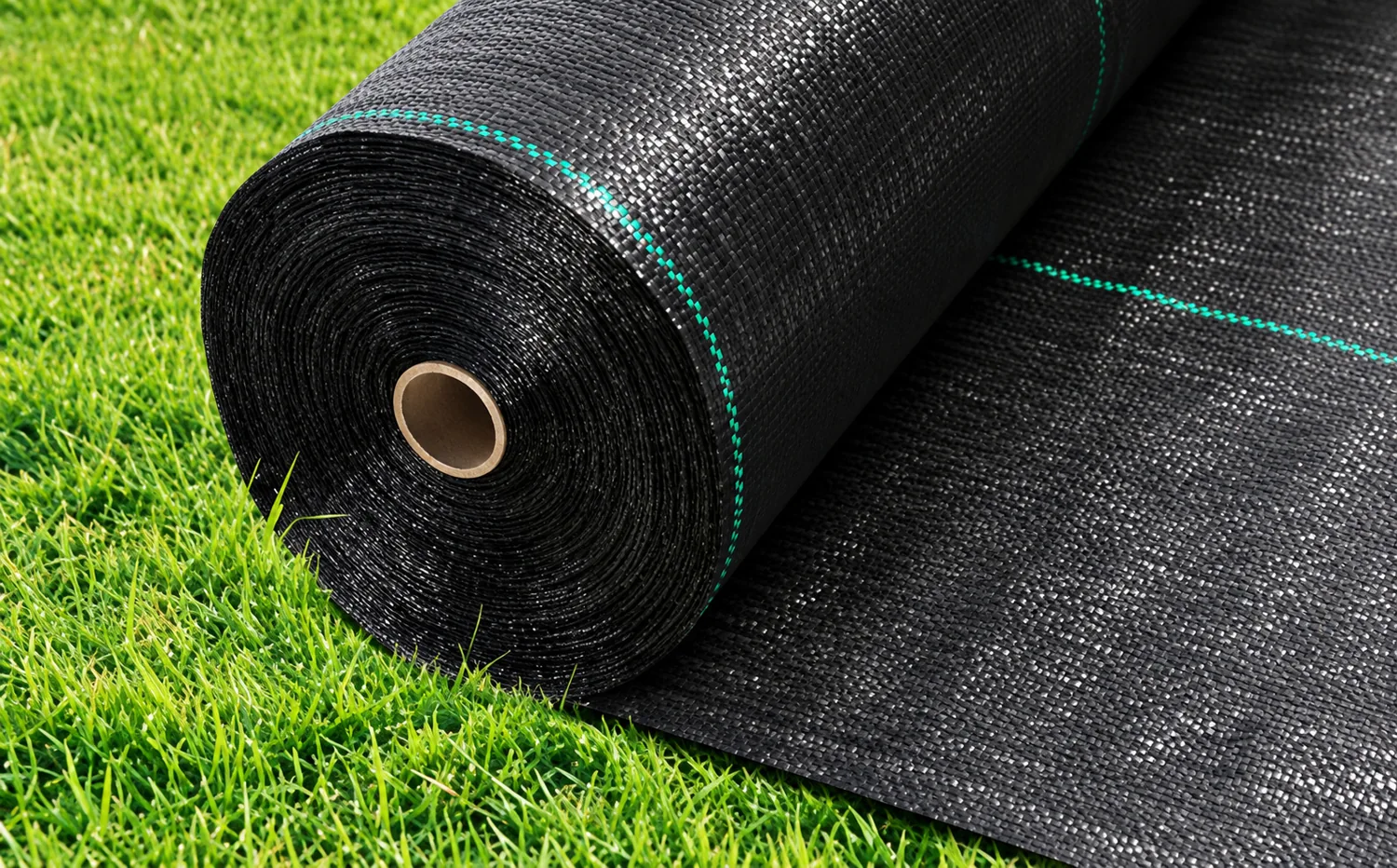
The ZNY Agri weed control fabric product page includes a PP catalogue reference of 100 GSM, 2 × 100 m. Use it as a starting point for discussion, then confirm the actual construction, grade and tolerances.
| Item | Reference or calculation | Buyer check |
|---|---|---|
| Material | PP reference | Confirm construction and proposed grade. |
| Mass per area | 100 g/m² | Agree the tolerance and inspection basis. |
| Roll size | 2 m × 100 m | Confirm width, length and packing dimensions. |
| Nominal roll area | 200 m² | Installed coverage changes with overlap and cuts. |
| Theoretical fabric mass | 200 m² × 100 g/m² = 20 kg | Calculation only; excludes the core, wrapping, pallet and agreed tolerances. |
Planning example: a 10,000 m² area divided by 200 m² gives 50 rolls before allowances. If your project-specific cutting plan adds 10% area, the example becomes 55 rolls. The 10% is an illustration, not a standard allowance; use your actual layout.
Download the ZNY Agri product overview for the reference range and inspection checklist.
Compare cost per usable area, not just per roll
For a bulk order, first make the technical offers comparable. Then list the quoted goods, packing and freight costs, alongside destination charges and installation items relevant to your project. Divide the included costs by the usable installed area, not a mix of different nominal roll areas.
Ask each supplier to state what is included and excluded. MOQ, sample charges, production time and shipping terms should be confirmed in the written offer. A low headline price with unclear dimensions or freight scope is difficult to evaluate.
Prepare a specification-based bulk enquiry
ZNY Agri combines manufacturing and trade support in China for global agricultural-material purchasing. For a weed control fabric enquiry, send the following information so our team can discuss a suitable configuration:
- Use: crop, nursery or orchard application, climate and irrigation.
- Specification: material, construction, GSM, width, length and required performance.
- Quantity: rolls or total area, with the unit clearly stated.
- Delivery: destination country or port and required date.
- Commercial needs: samples, inspection records, labels, packing and shipping scope.
Do not have a finished specification? Start with the application, area and destination. We can discuss the missing selection points before preparing the offer.
Our Kenya branch and overseas warehouse support regional enquiries. Confirm the exact product, current stock, collection and delivery arrangements directly with the team; catalogue availability is not a promise of local stock.
Prepare your weed control fabric enquiry →
Discuss specifications and pricing with Ethan on WhatsApp →
Email: ethan@znony.com
Weed control fabric: bulk-order questions
Does heavier fabric always last longer?
GSM alone does not establish outdoor life. Construction, grade, exposure, installation and maintenance also matter. Ask for evidence and warranty terms for the proposed product.
Can I use the catalogue size for a container order?
Use it to start the enquiry. Final order quantities and loading depend on confirmed roll dimensions, packing and shipment arrangements. Ask for a packing plan before making assumptions about container capacity.
Is ground cover completely maintenance-free?
No. Prepare the site, fit the material to the layout and maintain the surface. Check overlaps, openings and accumulated debris as part of routine nursery or orchard management.
Can I request a weed control fabric sample before ordering?
Ask for a sample corresponding to the proposed grade. Availability, charges and shipping are confirmed before dispatch. Record the approved sample reference in the order requirements.